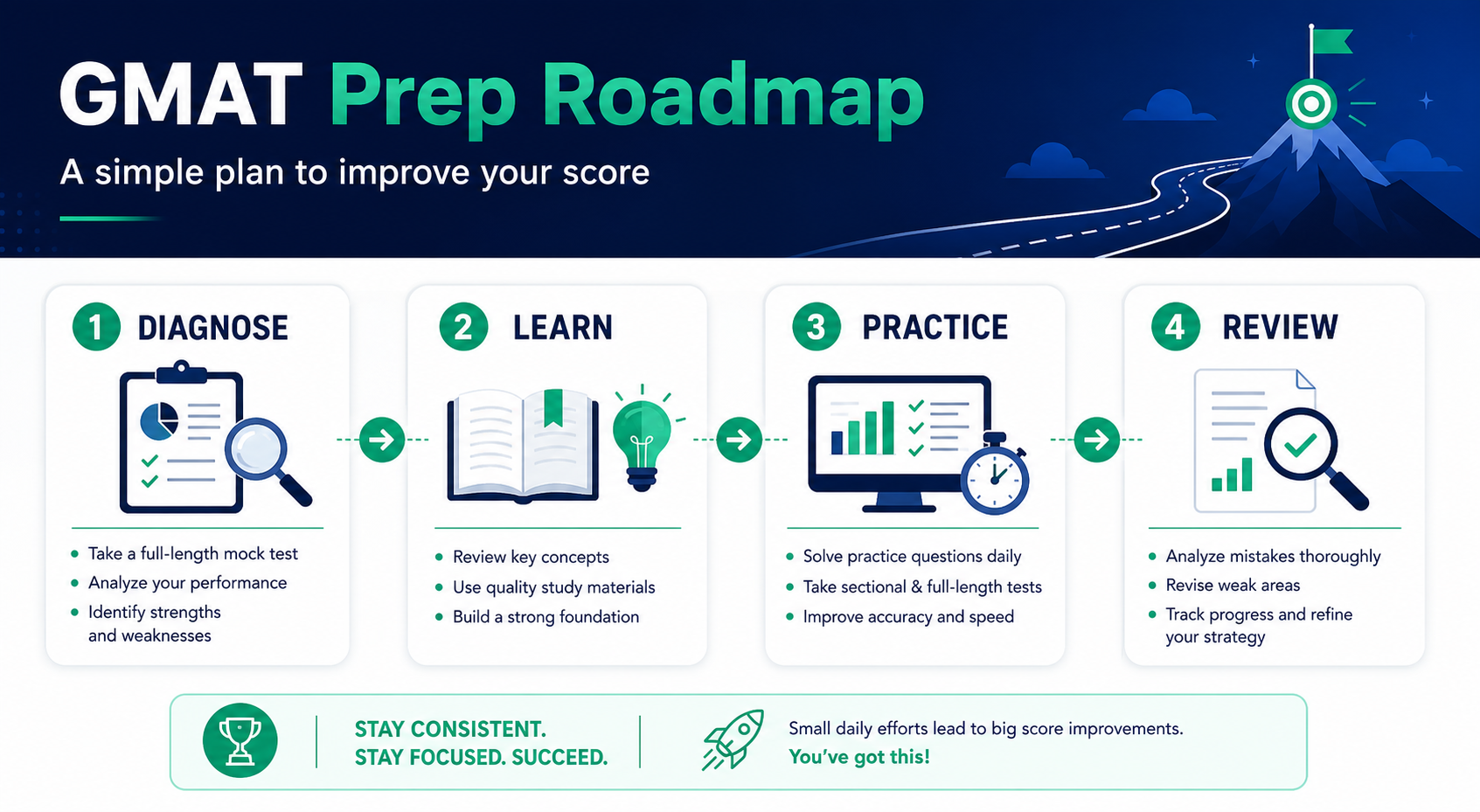
Preparing for the GMAT can feel overwhelming at first, but the process becomes much easier when you follow a clear plan. The key is to understand the exam format, build strong fundamentals, and practice with purpose rather than just doing random questions.
1. The GMAT Prep Roadmap
The best way to improve is to follow a simple cycle: diagnose your current level, learn the concepts that matter, practice deliberately, and review mistakes until they disappear. This keeps your prep focused and helps you improve faster.
Take a baseline test and find weak areas.
Review concepts and strategies section by section.
Solve targeted sets and build accuracy.
Analyze mistakes and fix patterns.
2. Start with the exam format
Before you begin serious study, make sure you understand what the GMAT tests and how the sections work. A strong prep plan starts with knowing the structure of the exam, the timing, and the scoring approach so you can avoid wasting time on things that do not matter.
For most students, the biggest mistake is jumping into practice questions too early without understanding the test. When you know what the exam is really asking, your study sessions become more efficient and less frustrating.
3. Take a diagnostic test
The best way to begin is with a diagnostic test. This gives you a starting point and shows which sections need the most attention, whether that is Quant, Verbal, or Data Insights.
A diagnostic also helps you identify patterns in your mistakes. For example, you may realize that your issue is not lack of knowledge, but poor pacing or careless errors under time pressure.
4. Build a study plan
Once you know your baseline, create a realistic study plan based on your target score and timeline. If you are working full-time, a shorter but consistent plan is usually better than an aggressive schedule you cannot maintain.
- Concept review.
- Targeted practice.
- Error log review.
- Full-length mock tests.
- Weekly revision.
The goal is not just to study more, but to study smarter and improve the exact areas holding your score back.
5. Focus on weak areas
Do not spend equal time on every topic. Instead, focus more on the sections and question types where you lose the most points. That approach helps you improve faster and gives you better returns on your study time.
For example, if Quant is your weak section, you may need to work on algebra, word problems, and time management before moving into full-length mixed practice.
6. Use practice tests correctly
Practice tests are useful only if you review them carefully. After each test, spend time analyzing why you got questions wrong, whether the issue was content, strategy, or careless mistakes.
A lot of improvement comes from review, not from taking more tests. When you understand your mistakes deeply, you stop repeating them and your score rises more steadily.
7. Final week strategy
In the final week before your exam, reduce heavy new learning and focus on light revision, pacing, and confidence. This is a good time to review formulas, common traps, and your personal weak spots.
The day before the test, avoid cramming. A calm and rested mind usually performs better than a tired one overloaded with last-minute information.
Conclusion
The best GMAT prep strategy is simple: understand the test, diagnose your weak areas, follow a structured plan, and review every mistake carefully. If you stay consistent and focused, you give yourself a much better chance of reaching your target score.